


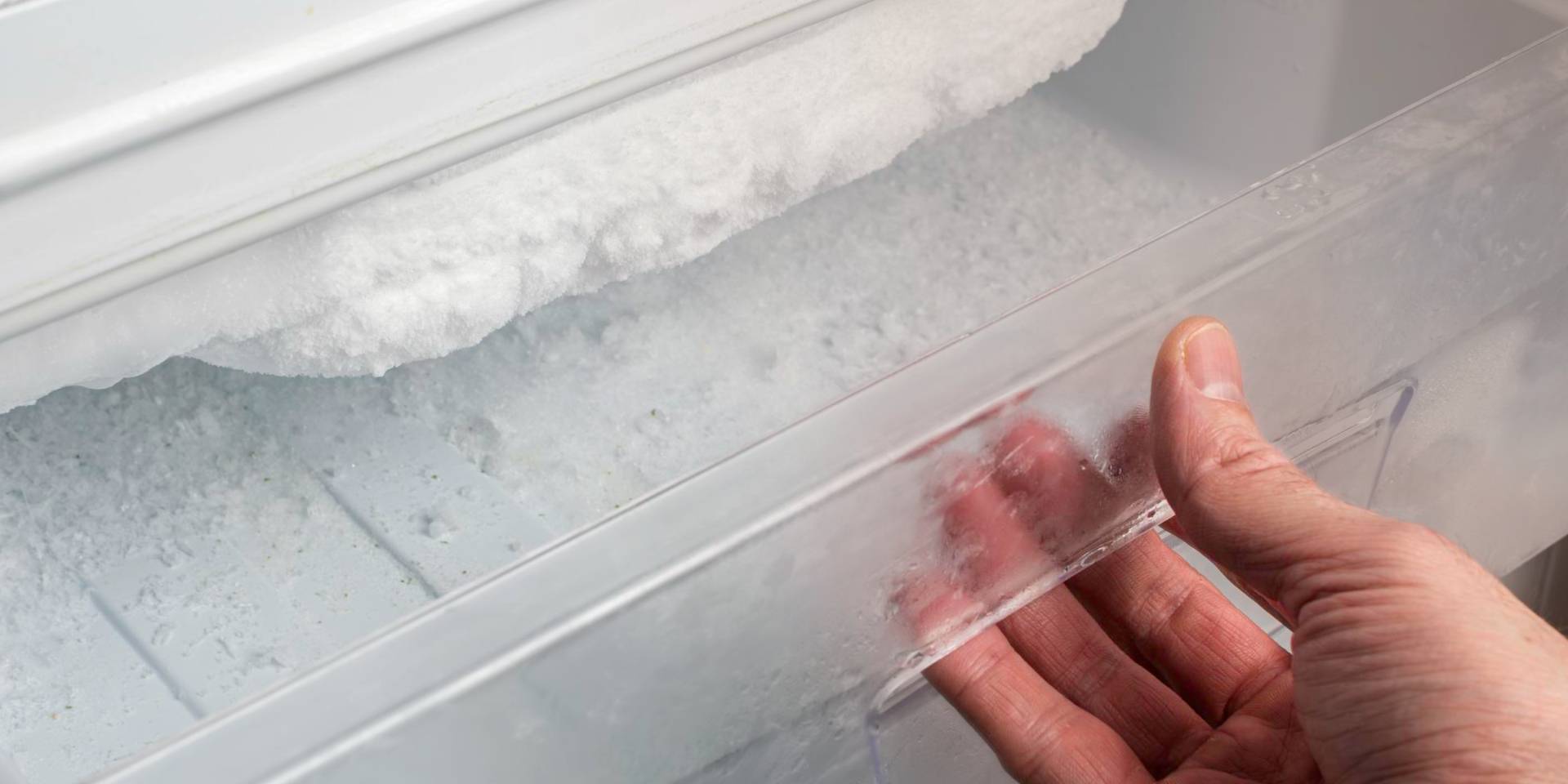

You defrosted your freezer only two weeks ago. Now the walls are covered again, there’s a layer of frost on the frozen peas, and the ice cream tub is stuck to the shelf. Seeing all that frost return so quickly is frustrating, but it also gives you a clue: too much moisture is getting inside.
That moisture turns into frost when warm, humid air enters the freezer and touches its cold surfaces. A little frost may appear from time to time, but a thick layer that returns within days could mean the door isn’t sealing properly or the freezer isn’t clearing frost as it should.
The good news is that several common causes are easy to check yourself. Follow the steps below, starting with the freezer door and food arrangement before moving on to problems that may need professional repair.
1. Make Sure the Door Closes Completely
Even a small opening lets warm, damp air into the freezer. A food package, bin, or ice buildup may be keeping the door from sealing. Start with these quick checks:
- Move anything sticking out past the shelves or drawers.
- Push every bin and drawer fully into place.
- Close the door and check for gaps around the edges.
- If the door keeps drifting open, check whether the freezer is level, per the owner’s manual.
2. Check the Door Seal
The rubber seal around the door keeps warm air in and cold air out. Dirt, damage, or a loose section can leave enough space for moisture to enter. Take a closer look at the seal:
- Wipe the seal and door frame with warm, soapy water.
- Dry both surfaces before closing the door.
- Look for cracks, tears, or sections pulling away from the door.
- Replace the seal if it’s damaged.
3. Cool and Cover Food Before Freezing It
Warm food releases steam as it cools. Uncovered food also releases moisture, which can freeze on the walls and shelves. A few changes can reduce that extra moisture:
- Refrigerate hot leftovers promptly in shallow containers.
- Freeze the food after it has cooled.
- Don’t leave perishable food at room temperature for more than two hours.
- Use airtight containers or sealed freezer bags.
4. Leave Room Around the Air Vents
A frost-free freezer needs moving air to maintain an even temperature. Food placed against the vents can block that airflow and cause frost to collect nearby. Check the food arrangement inside:
- Find the vents on the back or side wall.
- Move packages away from the vents.
- Keep food from resting directly against the rear wall.
- Leave small gaps between tightly packed items.
5. Check the Temperature
A home freezer should normally stay at 0°F. A setting that’s too warm can put food at risk, while an incorrect setting or unstable temperature may point to another problem. Here’s how to check it:
- Set a digital control to 0°F.
- For a numbered dial, use the setting recommended in the owner’s manual.
- Place an appliance thermometer between frozen packages to confirm the temperature.
- Wait 24 hours after changing the setting before checking again.
6. Check the Room Around the Freezer
A freezer in a humid basement or garage may collect more frost because damp air enters whenever the door opens. Extreme room temperatures can also affect models that aren’t designed for garage use. Take a quick look around the appliance:
- Keep the freezer away from ovens, heaters, and heating vents.
- Use a dehumidifier if the room stays damp.
- Check the owner’s manual before using the freezer in an unheated garage.
7. Watch for a Defrost-System Problem
If thick frost returns within days, even after checking the door, seal, temperature, and vents, the freezer’s automatic defrost system may not be working correctly.
A technician may need to check:
- The defrost heater that melts frost from the cooling coils.
- The sensor or thermostat that controls the defrost cycle.
- The timer or control board that starts the cycle.
- The drain that carries melted water out of the freezer.
Leave these internal checks to a professional. Don’t chip away ice with a knife or ice pick, and don’t use a hair dryer inside the freezer. Unplug the appliance and follow the owner’s manual when defrosting it.
When Frost Keeps Coming Back: Repair or Replace?
If thick frost returns within days after you’ve checked the door, seal, temperature, and vents, the automatic defrost system may be failing. A technician may need to inspect the heater, sensor, control, or defrost drain. Consider scheduling a repair if:
- Heavy frost quickly returns after defrosting.
- Food starts to soften or partly thaw.
- A sheet of ice forms on the freezer floor.
- Water collects beneath the appliance.
- The door seal is torn or pulled away.
Don’t remove interior panels or try to chip away ice with a knife. Follow the owner’s manual when defrosting the freezer.
Local Motive Appliance repairs all major brands, even if you purchased the freezer elsewhere. Schedule a service visit to find out whether we can fix the problem. If the freezer has repeated problems or the repair is no longer practical, browse replacement freezers at Local Motive Appliance.